
Get Trained:
Become a Bowls Coach
The EBCS can provide knowledge and support in developing coaching skills, but the individual must possess the desire, commitment, determination, good humour, and a thirst for knowledge
Why become a Bowls Coach?
People often become coaches for various reasons. Some feel that their days as active players is coming to an end, and they wish to contribute to the sport by giving back. Others seek to expand their knowledge and skills to help others improve their game. Additionally, some individuals argue that their extensive bowling experience qualifies them to teach others, but this is not always true.
Interactions with club mates and friends can shift when coaching on the green. Some may question your abilities, asking, “Who do you think you are?” or doubting your coaching capabilities with remarks like, “You are not that great a bowler.” However, it’s crucial to bear in mind the saying, “A prophet is not always recognized in their own land.”
English Bowls Coaches Society
English Bowls Coaches Society (EBCS) coaches are all volunteers, though expenses may be paid.
The EBCS can provide knowledge and support in developing coaching skills, but the individual must possess the desire, commitment, determination, good humour, and a thirst for knowledge.
Like in many other sports, EBCS recognises coaches at different levels of qualification, each encompassing essential teaching methods, skills, etiquette, green safety, and knowledge of rules and regulations. These levels include:
Coaching Levels explained
Level 1
After successfully completing this level, individuals are allowed to work independently with new club members. However, coaches are recommended to obtain a DBS Enhanced Disclosure certificate before starting, especially when working regularly and frequently with children or vulnerable adults.
Level 2
After successfully completing Level 2, individuals are qualified to conduct coaching courses customized for experienced players encountering challenges or those seeking to improve their skills.
Level 3
At this level, you will not only coach players but may also be tasked with assisting the training of Level 1 and Level 2 candidates.
A Level 3 coach is also known as a ‘High Performance Coach’ A coach at this level will be expected to have a DBS certificate and have attended Safeguarding courses and also a working with disabled people course.
The level one course takes about eight hours and is usually split between four sessions. This course will usually be run by a level three coach who can also examine the candidates. Usually, candidates having passed the level one will continue for a further four sessions to level two. The examiner at this time will not be one of the trainers. Those wishing to continue to level three will have to wait three years and show a high level of experience of coaching during that time. There is a lot of paperwork to prepare and a one day exam.
Advanced Coach
As an advanced coach you are expected to have successfully completed the above levels prior. Moreover, advanced coaches may train Level 3 coaches, conduct seminars, be invited to join the National Training Team, and lead teams at events, among other duties.
If you are interested in getting trained please complete this form and send it to the County Coach Alan Cheeseman who will arrange your trainers.
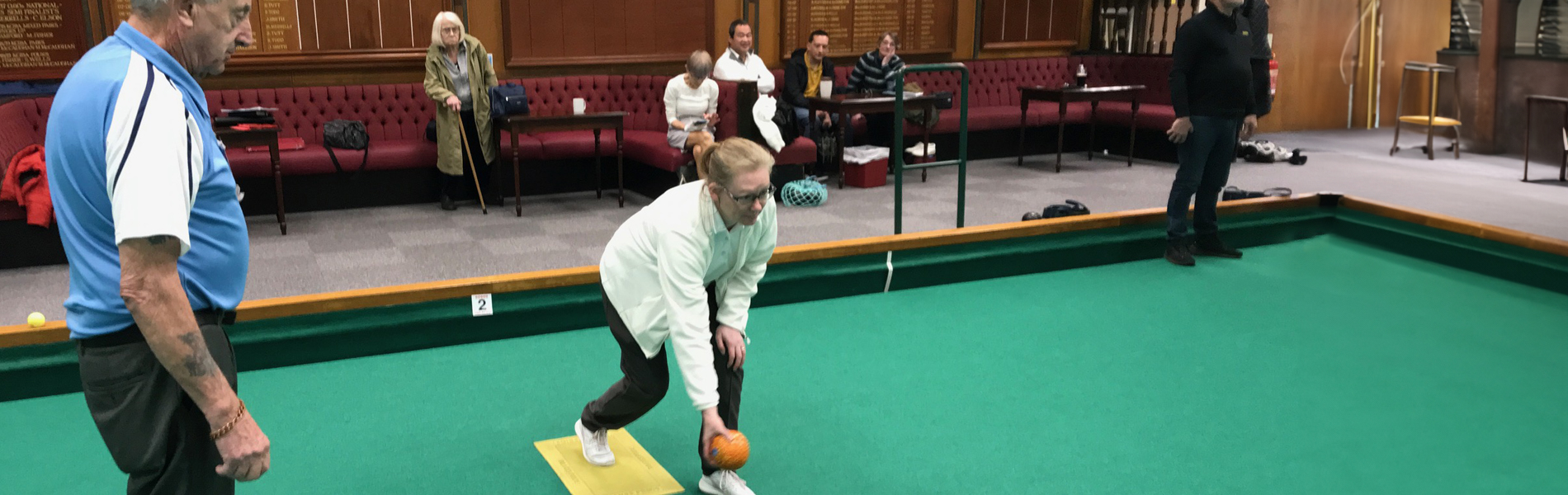
Coaching in action…

In this coaching course, you will need basic knowledge of measuring and the equipment commonly used. Throughout the course, you will receive guidance on the correct equipment and its proper usage.

Purposeful practice
Purposeful practice is used when a bowler experiences difficulty or issue, such as drawing the shot, inconsistency in bowling, challenges with jack length, difficulty finding the line, and more. It should be designed as a solo activity and achievable for the bowler.
Get In Touch
Reach out so we can work together to give you the skills that you need.
contact@kentbowlscoaches.co.uk
07850 233363 – Alan Cheeseman
 Bowls Kent Coaching Association